
Overview
NAD+ (nicotinamide adenine dinucleotide, CAS 53-84-9) is a dinucleotide coenzyme formed from adenosine monophosphate joined to nicotinamide mononucleotide by a phosphoanhydride bond. It cycles between an oxidized state (NAD+) and a reduced state (NADH) as it carries electrons through core metabolic pathways including oxidative phosphorylation, glycolysis, and the citric acid cycle.
Beyond this electron-carrier role, NAD+ also functions as a consumable co-substrate for a separate group of enzymes that cleave the molecule during catalysis rather than simply reducing it, among them the sirtuin family (SIRT1-7), poly(ADP-ribose) polymerases (PARPs) involved in DNA-damage response, and the hydrolase CD38. Because these enzymes deplete rather than regenerate NAD+, cellular NAD+ supply directly limits their activity. Research literature has documented declining NAD+ levels with age across multiple mammalian tissues, an observation that has connected NAD+ availability to studies of mitochondrial function and age-related metabolic biology.
| CAS number | 53-84-9 |
|---|---|
| Molecular weight | 663.43 g/mol (C21H27N7O14P2) |
| Purity | >99.99% |
| Storage | -20C, protect from light and moisture; hygroscopic, seal tightly after opening |
| Appearance | White to off-white lyophilized powder |
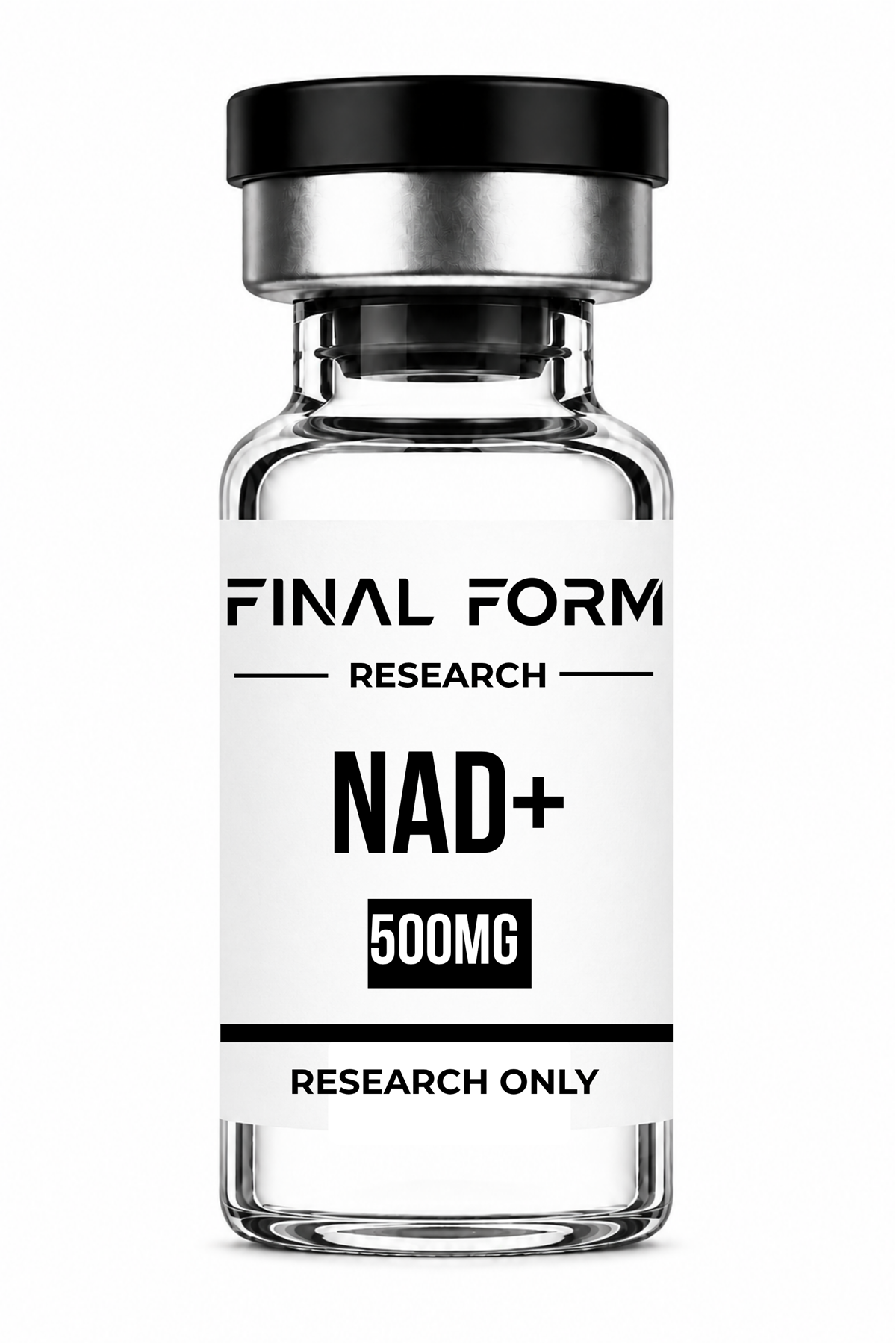
| Contents | 500 mg |
| Lot | FF-NAD500-260820-001 |